

Nippon Connection – The History ¼
The Nippon Connection Story
Every year between mid-May and early June, the Nippon Connection Film Festival makes the city of Frankfurt am Main glow in vibrant shades of pink for six days. As the world’s largest festival dedicated to Japanese film, it showcases over 100 short and feature-length films that offer exciting insights into the art of Japanese filmmaking. Numerous filmmakers and artists from Japan regularly attend the festival to personally present their work. With a diverse supporting program, the festival invites visitors to discover the many facets of Japanese culture. Since 2013, the Künstler*innenhaus Mousonturm and the Produktionshaus NAXOS have served as the festival’s main venues.
The Beginnings
It all began in the late 1990s with a simple idea. The enthusiastic film students Marion Klomfaß and Holger Ziegler, both experienced in the fields of cinema and film festivals, wanted to present Japanese films at Goethe University Frankfurt. At the time, Japanese films were celebrated at major international festivals but remained rare in German cinemas and on television. With the help of many supporters, they began planning their student project in 1999.
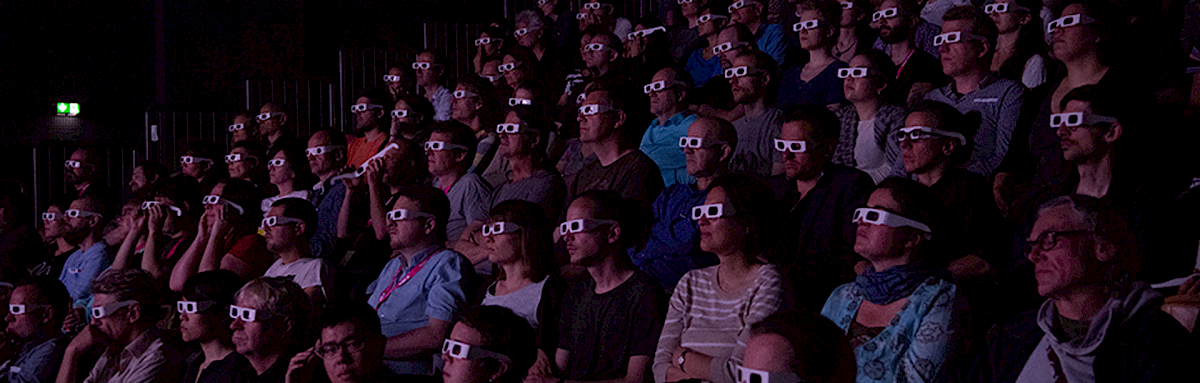
After winning a plane ticket to Japan in a prize draw, Marion Klomfaß visited the Yamagata International Documentary Film Festival and the Tokyo International Film Festival for the first time in October 1999. There, she viewed contemporary Japanese films and established initial contacts. In April 2000, the first Nippon Connection Film Festival took place at the Students’ House of Goethe University in Frankfurt-Bockenheim. Over the course of four days, 13 films were screened. From the beginning, the organizing team also planned an extensive supporting program to attract the audience and spark enthusiasm for lesser-known Japanese films with subtitles. Attendance at the first edition far exceeded expectations: instead of 1,500, around 10,000 visitors came, showing great interest in contemporary Japanese cinema and culture, thus validating the concept.
The overwhelming success motivated the team to continue the festival. During a one-year break, the non-profit association “Nippon Connection e.V.” was founded, and the second edition of the festival was planned for 2002. From then on, the festival was held annually. Already in 2002, the festival team introduced the “Nippon Digital” section, which featured video productions, and organized the first exhibition in cooperation with Künstler*innenhaus Mousonturm.
The Nippon Connection Awards
In 2002, the festival awarded its first prize: the “Nippon Connection Newcomer Award,” which went to BLUE SPRING by Toshiaki TOYODA. In 2003, the first retrospective, “Nippon Retro,” showcased films by Shuji TERAYAMA at Kino des DFF – Deutsches Filminstitut & Filmmuseum in Frankfurt; further events were held in collaboration with Literaturhaus Frankfurt. Since 2005, the audience award “Nippon Cinema Award” has been presented, sponsored by Frankfurt-based Metzler Bank since 2006. In 2010, an international jury selected the winner of the “Nippon Digital Award” for the first time (renamed “Nippon Visions Jury Award” in 2011), which supports up-and-coming filmmakers and is sponsored by the Japan Visualmedia Translation Academy. Since 2012, the festival has featured a dedicated children’s program (“Nippon Kids”). From 2012 to 2014, the “VGF Nippon in Motion Award” honored the best 12-second video spot.
A significant step toward the professionalization of the festival came in 2013, when the festival moved its main screening venue from the Students’ House to the Künstler*innenhaus Mousonturm and Produktionshaus NAXOS in Frankfurt-Bornheim, both of which also serve as festival centers until today.
In 2014, the “Nippon Visions Audience Award” was sponsored for the first time by Japanisches Kultur- und Sprachzentrum Frankfurt. From 2015 to 2022, the “Nippon Honor Award” was presented to individuals who made outstanding contributions to Japanese film. The recipients were Tadanobu ASANO (2015), Kiyoshi KUROSAWA (2016), Koji YAKUSHO (2017), Shinobu TERAJIMA (2018), Shinya TSUKAMOTO (2019), and Masatoshi NAGASE (2022). Since 2019, the audience award “Nippon Docs Award” also honors documentary films. In 2023, the “Nippon Rising Star Award” was introduced to promote exceptional up-and-coming talent in Japanese cinema. The recipients to date have been Toko MIURA (2023), Kotone FURUKAWA (2024), Kosuke HAYASHI (2025), and Anna YAMADA (2026). With the “Nippon Storytelling Award”, a jury award for the best screenplay was introduced in 2024, sponsored by the public relations agency Storymaker. Established in 2026, the “Nippon Animation Shorts Award” is given to the best animated short film. The jury award is presented by Wacom.
An Academic Perspective on Japanese Film
Since its founding as a student initiative, academic engagement with Japanese cinema has played a key role at Nippon Connection. International experts offer insights into Japanese film culture through lectures and panel discussions. The prestigious Kinema Club Conference, one of the most important international academic events on Japanese film and media, has been hosted at the festival three times (in 2007, 2015, and 2025).
Nippon Connection Online
Due to the COVID-19 pandemic, the Nippon Connection Film Festival was held online in 2020 and 2021. Films were streamed via a dedicated video-on-demand platform, while the supporting program – featuring lectures, workshops, panel discussions, and concerts – was broadcast live into viewers’ homes. The online format received a highly positive response and reached an international audience. In 2022, the festival was held in a hybrid format.
Record-Breaking Attendance
Since 2023, Nippon Connection has returned to being an exclusively on-location event. Visitor numbers have risen to around 20,000 in 2025. Fans of the festival travel not only from across Germany but from all over the world to Frankfurt am Main to watch the latest Japanese films and meet the creators. With over 100 short and feature-length films shown annually, Nippon Connection has become the world’s largest platform for Japanese film. Most films have their German, European, international, or even world premieres at the festival.
Over the years, numerous directorial talents have been discovered at the festival and continually supported, including Nobuhiro YAMASHITA, Toshiaki TOYODA, Shuichi OKITA, and Yuki TANADA.
A central goal of the festival is to foster exchange between audiences and filmmakers. Each year, numerous directors, actors, and producers personally present their films and engage in Q&A sessions. Notable past guests include stars of Japanese cinema such as Kaori MOMOI, Koji WAKAMATSU, Shinsuke SATO, Yukihiko TSUTSUMI, Ryuichi HIROKI, Kazuyoshi KUMAKIRI, Sakura ANDO, Masaharu TAKE, Miwa NISHIKAWA, Akira OGATA, Tomorowo TAGUCHI, Koji YAMAMURA, Isao YUKISADA, Kiyohiko SHIBUKAWA, and Junji SAKAMOTO.
An Award-Winning Film Festival
Nippon Connection’s success has not gone unnoticed in Japan. As early as 2004, the Japanese Ministry of Culture (Bunkacho) invited the festival organizers to Tokyo to take part in a symposium on the international impact of Japanese film. Further invitations to panel discussions and film festivals in Japan and Europe followed. In July 2013, festival director Marion Klomfaß was awarded the Gaimu Daijin Hyosho Certificate by the Japanese Minister for Foreign Affairs for her contributions to Japanese-German cultural exchange. In 2020, Nippon Connection e.V. received the prestigious JaDe Award. In 2023, Marion Klomfaß was awarded the Order of the Rising Sun, Gold and Silver Rays, by the Japanese government.
Nippon Connection offers visual pleasures that extend beyond the cinema screen: since 2000, a striking corporate design has been a hallmark of the festival. Its distinctive posters, in shades of soft pink to vibrant magenta, stand out even in the flood of advertising and have already won several German design and creative awards. From 2000 to 2009, the festival campaigns were created by Kai Bergmann, from 2010 to 2014 by Alexander Lis and Katja Baumann, and since 2015, the designs have been created by Il-Ho Jung.
Further Projects
Beyond the festival itself, the team has launched numerous other projects. For example, in 2003 they released the music CD “Nippon Connection – The Tokyo Metro Soundtrack”, for which German musicians created an imaginative soundtrack to the Japanese mega-city from recordings of sounds captured in the Tokyo subway by the festival team. In April 2005, the double CD “Nippon Connection Exchanging Tracks” was released, featuring reinterpretations of traditional Japanese music by renowned musicians from Europe and the U.S. Under the project title “Exchanging Tracks”, Japanese directors created short films inspired by the music tracks, which were then screened at the festival.
Until 2010, selected films from the Nippon Visions section went on tour worldwide under the title “Nippon Connection Film Festival On Tour,” with screenings in cities including New York, Barcelona, and Berlin.
From 2020 to 2022, a selection of the festival’s film program was also made available online for a month after the festival under the title “Nippon Connection On Demand: Replay!” Since the end of the COVID-19 pandemic, Nippon Connection has regularly presented Japanese films year-round in cooperation with cinemas and cultural institutions throughout the Rhine-Main region.
A Labor of Love
Despite its scale and the wide range of projects run by Nippon Connection e.V., the organizing team works mostly on a volunteer basis. The diverse team now consists of around 100 members of different ages and nationalities. During the festival, more than 100 additional volunteers lend their support, all united by a shared passion for Japan and Japanese film. Each year brings new challenges in securing the festival’s funding, which comes from a mix of grants and sponsorships. Fans can support Nippon Connection by donating via the online platform betterplace.org or by becoming supporting members. Even after 25 years, the team’s enthusiasm remains as strong as ever, with a continued mission to promote Japanese (film) culture in Germany, with fresh ideas waiting to be realized.